Ankorstore · B2B SaaS
Conversational
Experience
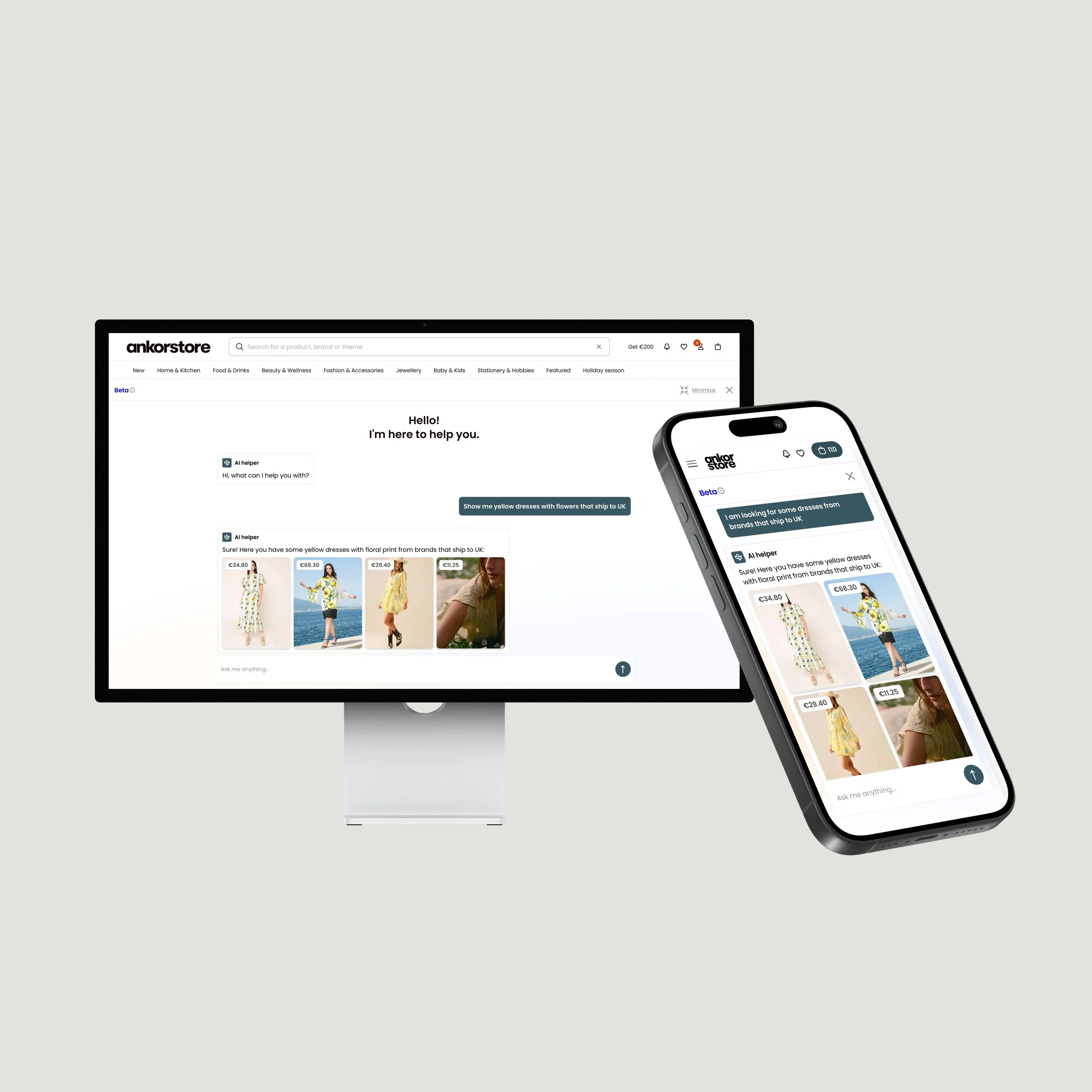
Context: Ankorstore is a B2B e-commerce with 3M+ products in +360 categories.
Challenge: Introduce a totally new —more natural— way to interact with our platform via conversational chatbot, allowing users to perform all the actions they currently do on Ankorstore just chatting with a chatbot.
MVP Goal: Validate user intention of use and learn from their expectations. We put the focus on Product Discovery.
Impact: Around 2K conversations per week, 97% Click-through Rate and 6% attributed Add to cart.
Design process
1. Research
Research for this project consisted on identifying in our research database the biggest pain points our ICPs (Ideal Customer Profiles) had, that were related to their interaction experience with the platform (not business, logistics, finance… related).
We identified 3 main pains we could solve:
Complexity to find new products and brands
Struggle when navigating through our products taxonomy
Hard to find platform and business-related information (buying conditions, returning products, events/campaigns…)
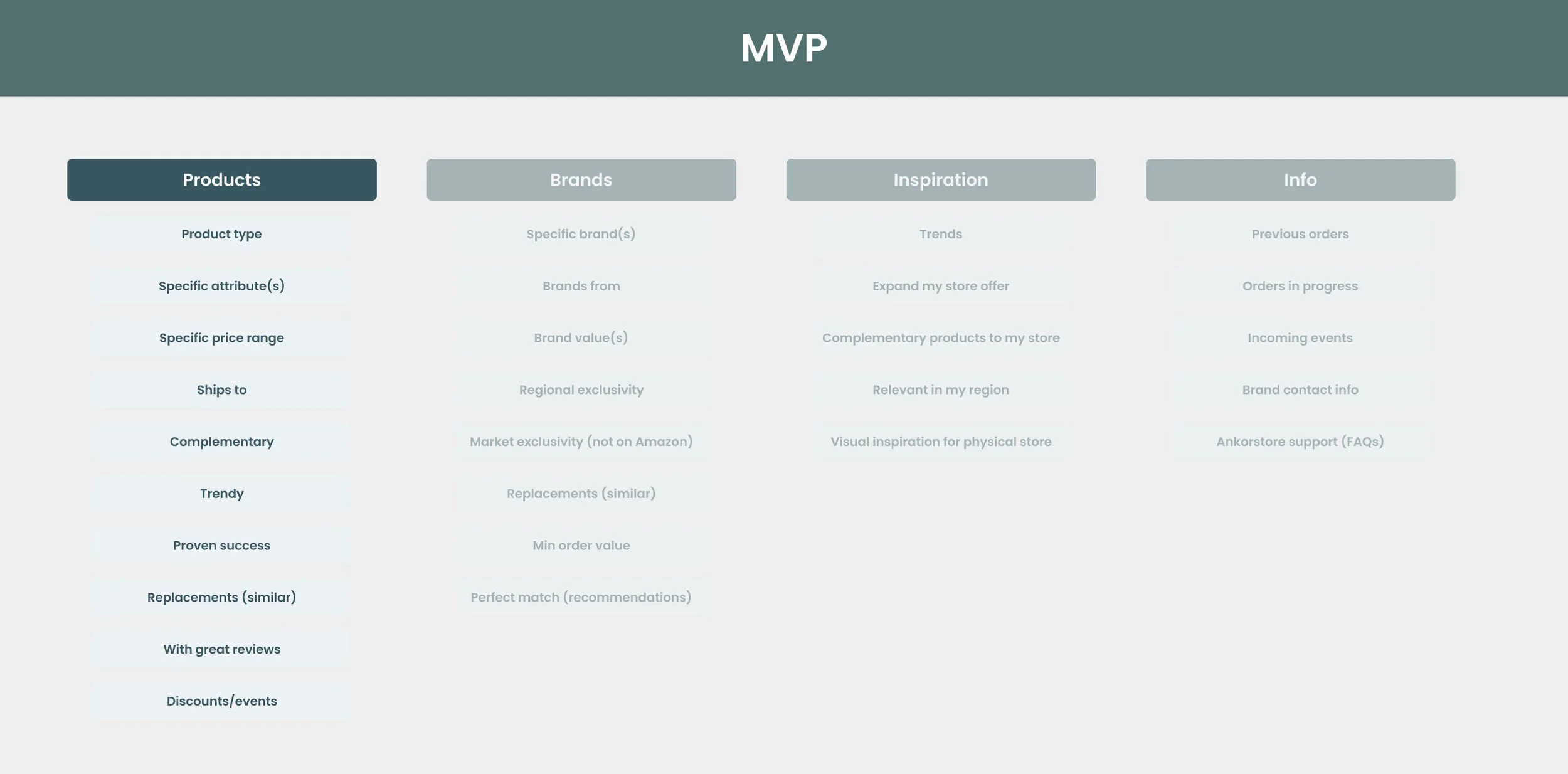
Mapping of expected queries, prioritising Product Discovery for the MVP
2. MVP Definition
During a priorisation workshop with the squad, we decided to move forward with Product Discovery for the MVP. Also we wanted to add suggestions (first static and based on data from Elasticsearch for the most searched products in our platform) and a feedback component to let users tell us their satisfaction
That implied designing:
The Chatbot component
A new Minimal Product Card (based on the learnings we got from previous research saying the top 2 most important pieces of info are 1) Images and 2) Price)
A feedback component: thumbs up, thumbs down and when thumbs down and input field to explain what went wrong
Entry points to open the chatbot. We picked high discovery intent places: the searchbar with a suggestion to keep your search with the chatbot, and a Floating Action Button in Discovery pages (Homepage, Category pages, Search results page…)
Tracking and metrics for success:
Number of conversations started per week (success +1000)
Click-through rate (success if higher than Search Results CTR)
Add to cart rate (success if higher than 5%)
We shared the initiative with the company stakeholders and got green light to start working.
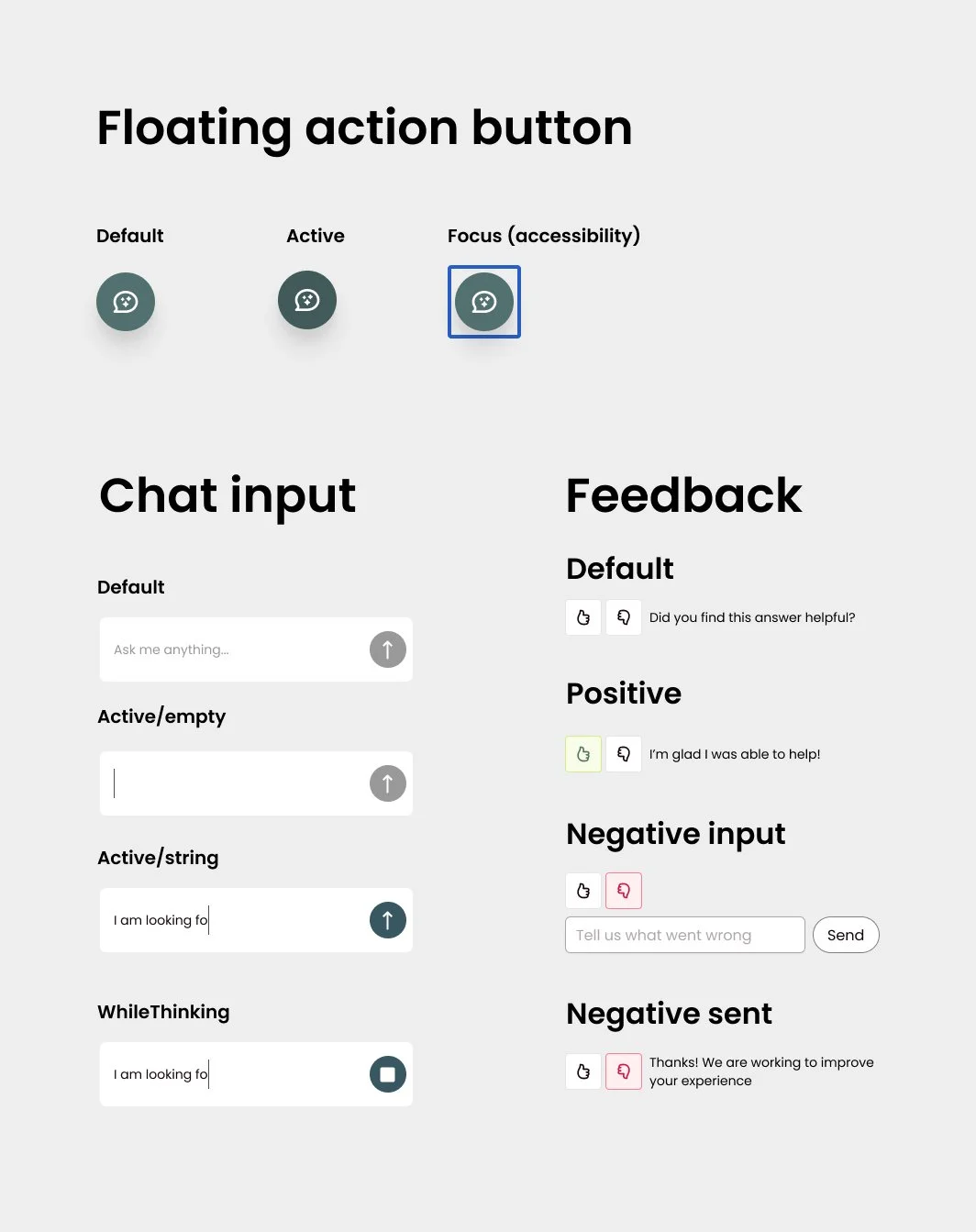
Documentation of some of the new components designed
3. Design and implementation
We tackled the initiative mobile first, as our main user is the Discovery Buyers one and there is a 52% mobile usage on this user segment.
For desktop, and in order to not break the user flow, I decided to use the mobile designs as a reduced version and allow the user to expand to reduce the noise of their page content, allowing them to come back to their previous flow without breaking it by just minimising or closing the component.
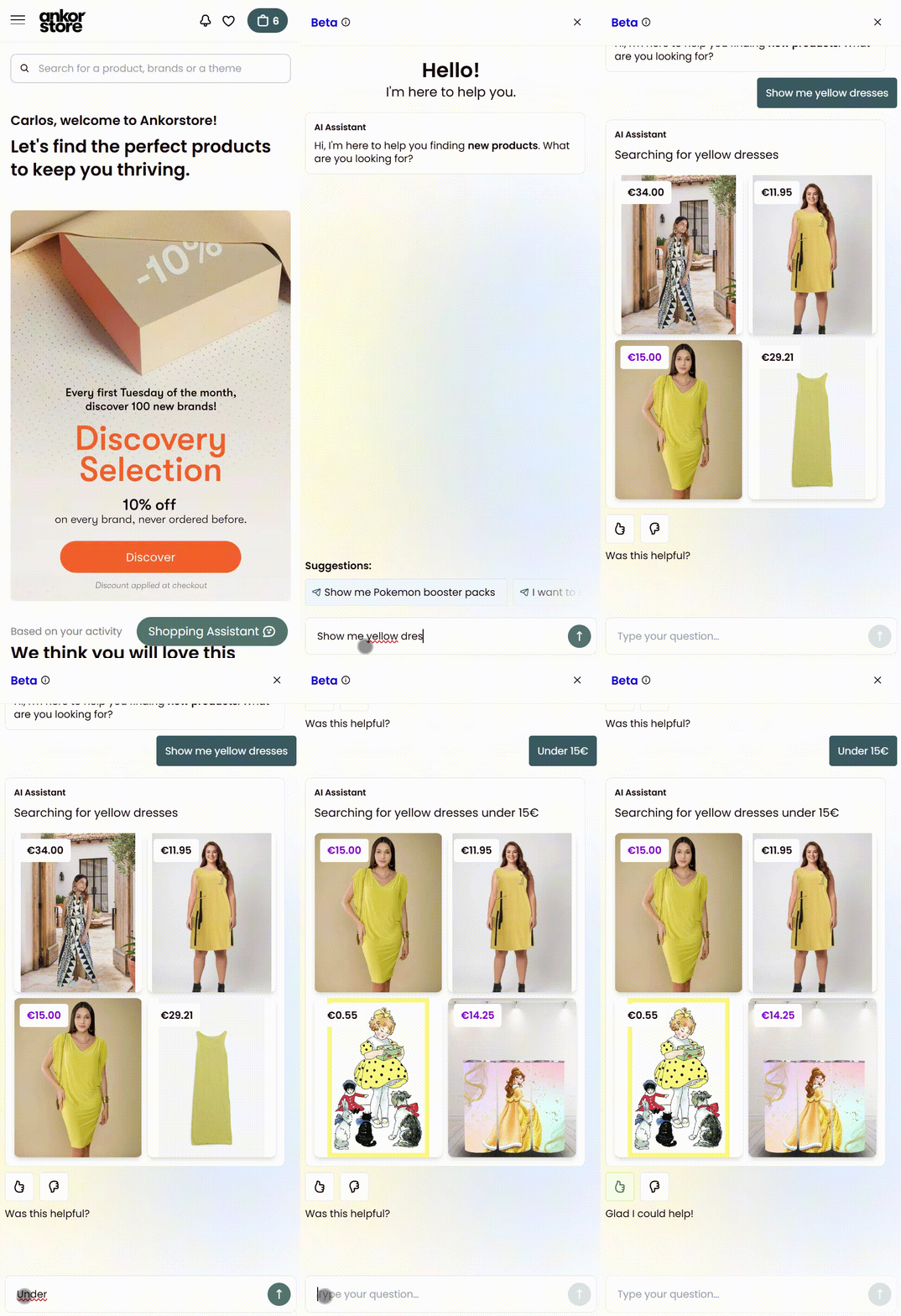
Mobile interaction
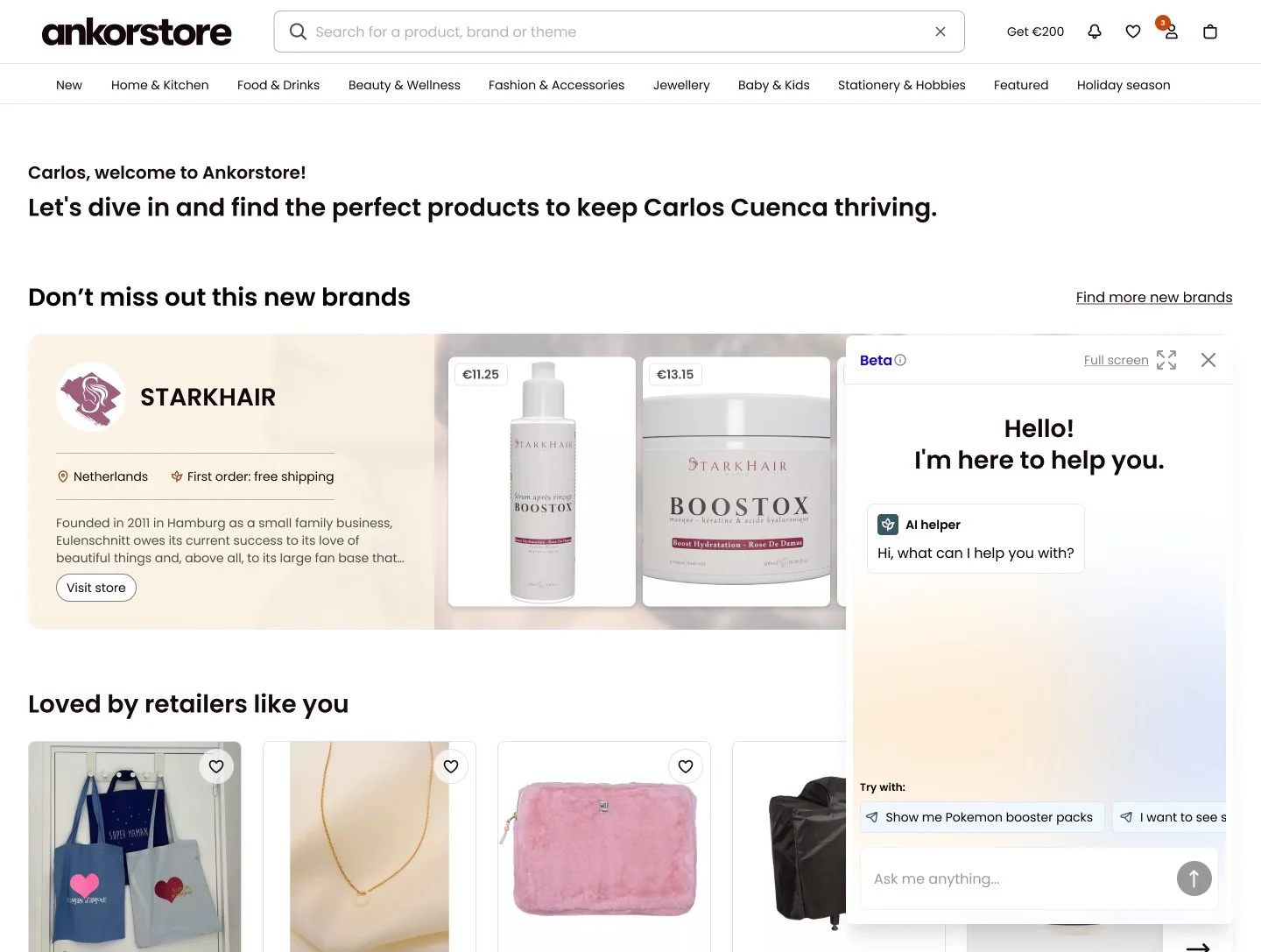
Desktop: reduced version
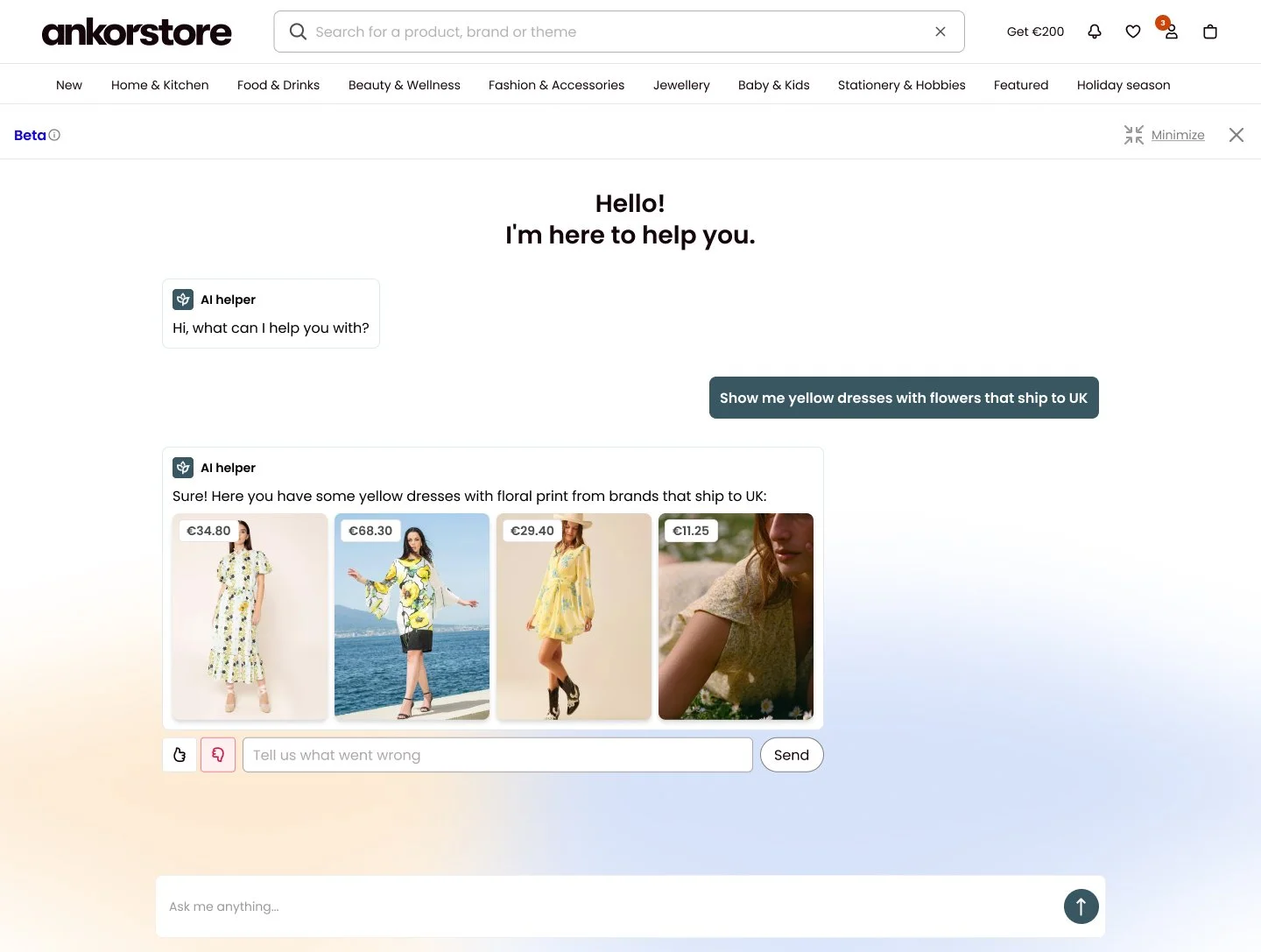
Desktop expanded version
4. Impact, learnings and next steps
As expected, the initial 3 weeks we saw a high number of conversations started (+4000 per week) with low CTR (average 13% for the 3 first weeks) and Add to cart (below 1.5%) rates.
That was due to curiosity on the new feature. But after a month, idscovery of the new feature decreased, leaving us with more stable and reliable metrics:
Number of conversations started average: 1938 (vs 1000 target)
Click-through rate: an astonishing 97.4% (vs 43% search results page)!
Attributed Add to cart (meaning attributed not only products directly clicked but other products from the same brands that were dsicovered thanks to the feature): 6.2% (vs 5% target)
Learnings:
Performance of the feature on its initial weeks was really good, but the Click-through rate was not calculated based on all teh conversations started, but the ones that had a product discovery intent, and those were an average of 740 per week. That meant that Add to Cart 6.2% rate means 45 products added to cart, which has a low impact in our revenue.
We found out that relevance of products was low, and that is out of our sqhad control, as the products are served based on the Search API controlled by the data team, that is having a low relevancy score for now. We need to wait for further improvements in Search to deliver more impact.
Next steps:
Analyse conversation Exports to identify intent of use and put the focus on other value propositions (like placing orders, understanding better FAQs, etc).
Let’s talk!
If you think my experience could be a good fit for your team and we could grow together, I’d be happy to connect.